Saturday, 24 August 2024

Albury Staging yard design finalisation

 Albury staging  yard -or- chicken scratchings on the floor

6029 visited Junee in June 2019.  This image of the engine being prepared outside the roundhouse has nothing to do with this blogpost, just thought I would share a happy memory

Stub ended yards at both ends of the mainline, are a feature of an "X factor" layout design, which allows for trains to be remarshalled easily at the end of an operating session, without the need to traverse the entire layout.  I wrote up the design theory on an earlier blog post written 7 years ago.

https://buildingwagga.blogspot.com/2017/08/x-factor-layout-design-theory.html


The diagram from the earlier Blogpost shows how the yards connect to the mainline.

The Albury staging yard will be a stub ended yard comprising 13 tracks.  That is the current plan. 

The trackplan gives an idea of where the staging yard tracks will go.  This diagram was more illustrative, than accurate - and failed to include the doorway to the garage. 

Drawing out the yard tracks - Take 1

Since drawing out the Bomen station, and loop to confirm that the aisle access is adequate, this also provided me with the maximum dimensions for the yard "baseboard".  I placed brown paper over the Bomen level drawing, and chalk was then drawn to represent the yard tracks.

5 stub tracks at the rear, and 4 at the front.  There is a 1 metre steel rule near the skirting board, to give an idea of the siding size.  Note. The staging yard brown paper hide the paper and other lines are for the Bomen station level, which will be built 20cm above the staging yard tracks
The fan for the 9 short staging yard tracks 

The fan for the long 3 metre staging yard tracks at the other end of the wall.

I let the design sit on the floor for quite a few weeks, whilst I pondered.  I was not overly happy with the turnout positions, as they would be awkward to access when the bomen station is placed just 20 cm above the yard tracks

Take 2.

Making changes with chalk is a lot easier than after you have laid track.


A modification to the location of the 9 siding fan brought all the turnouts closer to the edge of the future baseboards, and thus I hope, will be easier to access.

Like before, I let the design sit on the ground for a while.  The shortness of the sidings near the skirting board seemed a bit short.  Was there a way they could be increased in length?

Take 3

Removing one of the rear sidings, and adding an extra siding to the front group has effectively increased the length of the 2 short sidings - the new siding at the front is now just over 2 metres long. 

Each of the yard track "baseboards" will be around 40cm wide.  That will easily accomodate 5 tracks, plus the wiring.  I am trying to avoid wiring underneath the staging yard tracks as much as possible. 

More structure placement

The Murrumbidgee Bridge

Just two 159' spans of this 4 span bridge were made.  Disppointing aspect to me, is that the 5km long approach viaducts will be considerably shortened   


An ebay purchase of a scissors crossover is positioned behind the backscene of the Murrumbidgee River bridge (chalk shows the location of the bridge

The scissors crossover is a bespoke piece, made by the UK track wizard Patrick Nichols.  It uses 4 modified peco medium radius turnouts, a shortened crossover, to achieve a track centre of just 51mm.  It wasn't my first choice.  Somewhere I have stored two Shinohara scissors crossovers, but after I spent far too much time searching for them, I guessed they would turn up only if I bought the Peco version.  

NSW 40 class - Another ebay purchase


Pair of 40 class engines at Wagga in 1955.  (Photo by Stormont).  

One cannot have too many engines.  

4004 - a Lloyds kit

The seller advised that he had purchased 4004, assembled, painted, and ready-to-run from Lloyds around 20 years ago.  " A good runner, and DCC fitted" was the claim.  

I know the model well, as I also made one from a kit.  Eureka models have subsequently imported  excellent injection molded 40 class made in China, so the older kits have lost some desireablility.  

On my small test track, I discovered the DCC chip was a ESU-Loc pilot (non-sound), with a very large keep-alive capacitor.  However, 4004 was not a good runner.  To cut a long story short, one of the geared axles in the K&M mechanism was split, and after removal of this gear, the engine now runs sweetly.  I may not need to replace the gear, 4004 has enough weight to run fine on 5 axles - the prototype actually only had 4 powered axles, the centre wheelset on each bogie being unpowered.

Another delivery

Les, who now lives in Adelaide, and well known for the South Australian modellers convention, contacted me with an offer I could not refuse.  A NSWGR carriage mirror.  This would be a great addition to my train room ensuite.  The only concern was getting the mirror to me without breakage.  Les though had the answer.  His friend Geoff was planning a big road trip, and included me on the itinery with the fragile mirror.  But I was not prepared for what Geoff was driving.

Geoff was on his way to Townsville to race side-car motor-cycles (stored in the trailer).  He had 2 months to get there.  I had a quick inspection of the bus - it is an amazing conversion to become a travelling home

The mirror has lost some of the silvered backing, and this shows up as dark marks in this picture.

Before I install the mirror, I will try and do some quick restoration using aluminium foil.  A full restoration, to completely replace the mirrored backing is something for the future.

Train room update.

I am pleased to report that the train room is nearing completion.  

The ensuite is now ready for use.

And the warning sign regarding use of the WC is now affixed to the wall above the cisten.

Metal weather strip to protect the edge of the floorboards onto the concrete path beyond the door


Painting the door and trim around the doors and windows is taking time.  The gloss white is such a pleasant change from the tired pale yellow.  A second coat will be needed on the doors.

Not everything has worked out.  There has been some significant subsidance of the earth packing around the septic tank.  Understandable, as the bob-cat couldn't really pack the dirt firmly, or the septic walls would have been crushed with the weight of the bob-cat.  My plumber assessed the damage, and fortunately, there wasn't any.  He suggested filling the holes with fresh earth.  This process has started with 6 wheelbarrow loads of sand.  The recent rain has made a few more holes, so I guess I will need some more sand. 

Conclusion

Getting a train room has been a long process, but the end is now in sight.  Money spent thus far is just over $39,000 - which was more than I was expecting, but still fairly cheap for a room fitout.  Of course the layout build is still on the agenda, and I  am looking forward to starting. 

Until next post, build a model or two.


Friday, 26 July 2024

East Coast Layout tour - Pt4

 Visiting layouts, and Train stations - Part 4


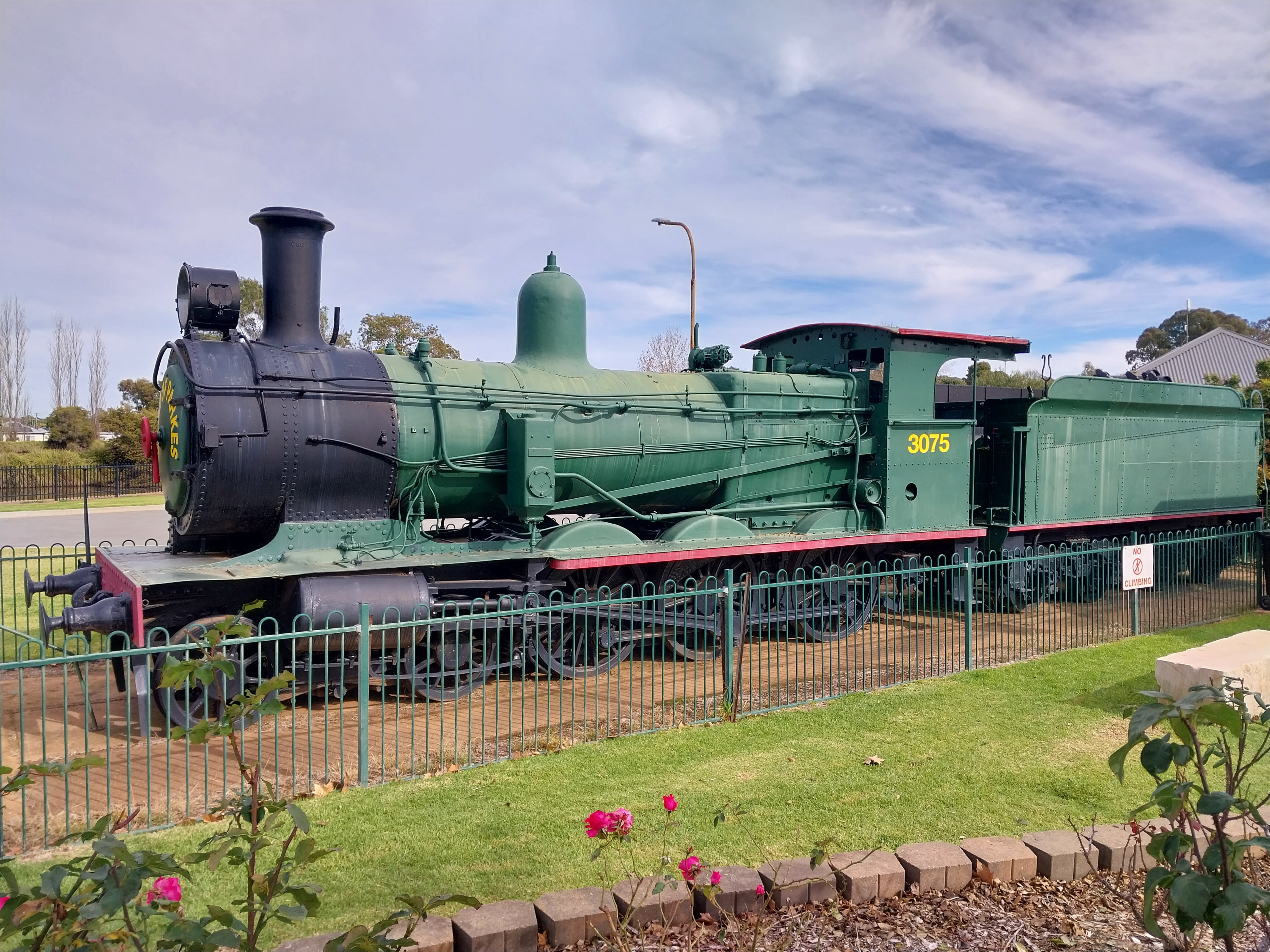
C30T 3075 plinthed in a park at Parkes.  Visible from the Newell Highway.  The C30T is the class of engine that was used extensively on NSW country branch lines.

Day 11. Coffs Harbour to Dorrigo


Another short drive to Dorrigo.  Bill wasn't expecting me to around 11am, so it gave me some time to explore.

I bypassed the dual carriageway of the Pacific Highway, and travelled over the old highway.  This is the roadbridge over the Belligan River. 

And I stopped at Belligan, which has some marvellous old buildings along the main street

The Waterfall Way is a "tourist" route from the coast to Dorrigo, and Armidale.  Scenery was stunning, and we haven't yet got to the waterfalls

I stopped at Dorrigo National Park, at the top of the escarpment.  Looking back towards the coast


I took a short bushwalk whilst at the Nat Park.  If you are modelling  a temperate rainforest, you will need to layer up the vegetation to get the full effect

Dangar Falls, just outside of Dorrigo.  Bielsdown River

Dorrigo is located in the New England district.  Yes, some vistas reminded me of England

I had a bit of time to explore Dorrigo.  Looks like a town that time forgot.  


Commercial Hotel - Dorrigo

Dorrigo Hotel

The Dorrigo collection


Bill had arranged a quick 2 hr visit into the vast NSW railway collection of Keith Jones, normally off limits to anyone except members of Keith's group.  I went a bit mad with the camera.  Here is just a small subset of the pictures taken.

Railway recovery trailer used by Keith to recover many items of rolling stock

The sad remains of 3813.  This loco was dismantled in Sydney awaiting overhaul, when a government decision was made to stop.  Boiler, cab chassis, tender etc are all now at Dorrigo

Transformer transport vehicle ran on 7 bogies each end.  Bill told me it was used just 6 times before "retirement".  I have started some research to find if the delivery of transformers to the SRCC electrical siding on the Tumbarumba branch in 1971 used this carriage


X200 - second design.  These shunting tractors' wheelbase was made from the bogies of the AD60 garratt.  Both the first, and second series X200 shunters worked Wagga

X200-original style.  Not sure why this is numbered X104.  This mystery was solved later, when Ben, fellow Junee resident, said that the number was changed to allow one-man operation

X100 shunting tractors were underpowered

I have an interest in Sugar cane locos, and many mills use 2 foot gauge Clyde locos.  This standard gauge Clyde was a surprise

Most of the remaining SMR 10 class are residing at Dorrigo

Tri-Bo unique 8650,  I first saw this loco at Chullora about 45 years ago, during the Railways 125th anniversary celebrations.  Auscision made a model of 8650


Ex BHP steel works. 

4918
And from the public road

Standard goods

C19 class 1904


AD60 6039

Bill's layout at Dorrigo

I have known Bill since the mid 1980s, when we both lived in Queanbeyan.  Bill had a flair for adding drama into his layouts, which didn't follow any prototype.  Fantastic mountains, impossible ledges,  long runs,  tunnels and bridges everywhere.  Bill moved from Queanbeyan to a farm in the Dorrigo region, and this was the first time I was able to visit.  Recently, Bill had to relocate from his farm into Dorrigo proper, and abandon the layout built at the farm (pictures of that layout can be found on the NMRA AR Website)  I am pleased to report that Bill has once again started a new layout,  following strongly in the tradition of imagination

Entrance to the Train room.  

Big bridges, and deep canyons. Another inspiration from the late John Allen's 'Gorre and Daphetid'

Control panel shows the location of each of the buildings.

Still in the process of being built.  Will be a fascinating shunting district

Bill was including some sections of the late Bruce Block's UK layout.  This is a fine tribute to a life long friendship.
Bruce had built a model of the Chepstow bridge - prototype was designed by  Isambard Kingdom Brunel around 1850  

Christmas Village premade resin structures were arranged on a liftout section to access a hidden helix

Oil generating siding - note the extraction pumpjack (sometimes known as a "grasshopper pump")  Animation of the pump will help draw viewers attention. The crude oil will be forwarded to the refinery as part of the model railroad operation.

Bill used brackets to hold up the shelf benchwork. These have a low profile, and are quite strong

LED lighting strips used to illuminate under the shelves.  Yes, it was a bit blue


I asked about the power requirements for the LED lighting.  Bill said he found these power supplies off a well known auction site - 2 or 3 pages in.  Bill bought a number, but so far, just one has been sufficient


This is an operation card for freight car NADX 6412 from his earlier layout.  The waybill below is held in the car card, and when the car reaches the destination, the waybill is turned around to display the new destination etc.  I liked the colorful writing, and graphics, as it was easy to read

The waybill card is doublesided - so holds 4 destinations

Block diagram of Bill's former farm layout

More fantastic bridges.  Bill stacks multiple tracks to increase the length of the mainline, whilst gaining elevation to the upper deck

A car float is a good way of including multiple industry types in a single destination


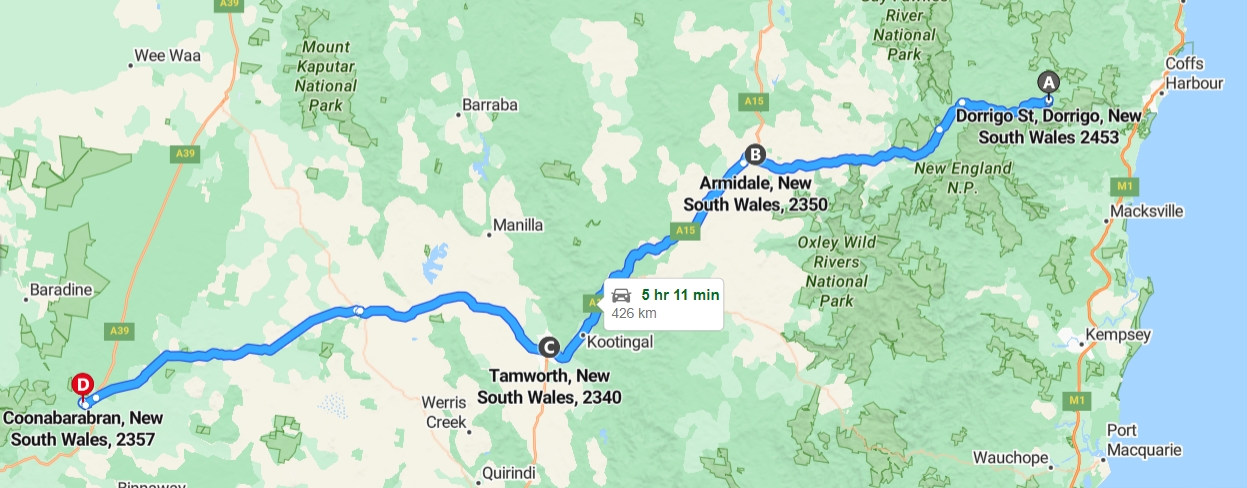
Day 12  Dorrigo to Coonabarabran

After overnight at Bill's, the following day started wet.  Just as well I got to see Keith Jones' train collection the day before.  More waterfalls today


Ebor Falls, on the Guy Fawkes River

Woolomombi Falls, on the Chandler River

Armidale railway Station

Armidale Railway station.  Another Whitton station (like Wagga), but with a gothic style

SM residence at Armidale is a close relative to the SM residence at Wagga


Footwarmer stove, and museum next to the station.  The museum was not open, but I will have to try and visit in the future

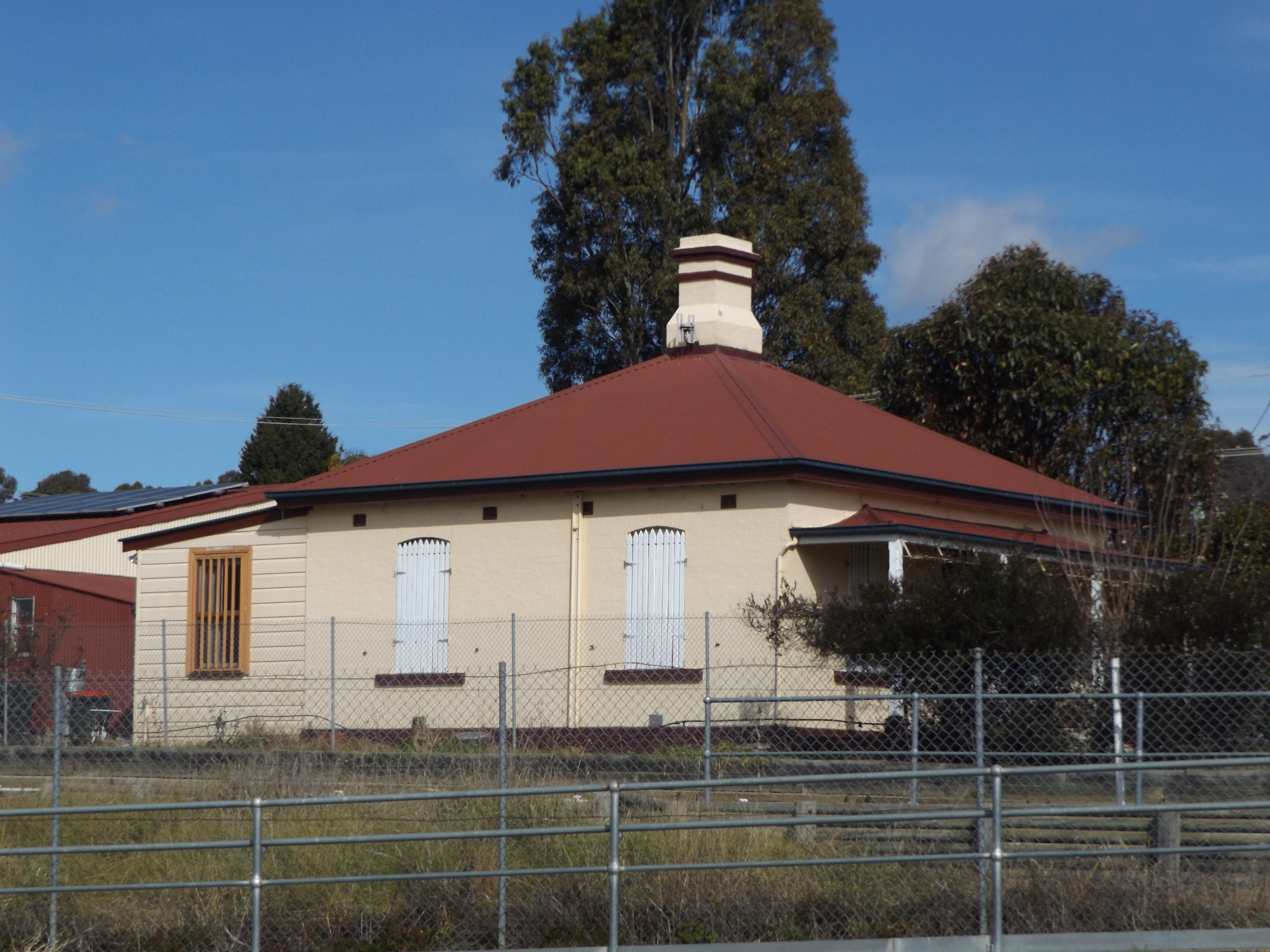
Gatekeeper cottage on Butler Street remains, despite the level crossing being abandoned


Tamworth Railway Station

Tamworth Railway Station was constructed approximately the same time as Wagga, and shares some of the classical gable triangles


West Tamworth

I didn't get to West Tamworth this trip, but I did in 1992.  There is a big simularity with Bomen station.  I have included this for another reason - Marcus's layout (see Part 2 of this series has a West Tamworth station) (note. The red car is my Ford escort - it got me to a lot of railway stations before they were demolished)


Coonabaribran

I got into Coonabariban too late for pictures of what remains of the railway.  Google street view shows that the station has gone, and other things have changed.  So, another deep dive  into the slide cabinet to locate my 1992 images.

The station has been subsequently removed, but Google shows the goods shed, and the small shed on the platform still exist


Lock lever, and 2 home signals on the ground frame

Freezing works had a siding.  Google street view shows this building has been replaced by a brick structure, and no evidence of the siding remains.  Home signal at "stop"

Goods shed

Day 13.  Coonabarabran to Junee (home)

Back home today. Long drive.   Early start was to remove frost from the car windscreen


Dubbo Railway Station


SM Residence at Dubbo, built in Sandstone, has a slightly different design to the SM residence at Wagga

A surprise was finding a full set of levers in the platform signal box


The signal box also had 2 miniature staff instruments, and a set of metal  staffs


Waiting room

Who said tank cars are extinct?  These cars are carrying diesel for the various private railway operators

QUBE diesels at rest

The bridge over the Macquarie River at Dubbo are 3 x 159' whitton spans


The spans are a lighter design than the Whitton 159' spans used at Wagga Wagga over the Murrumbidgee River  It is interesting that they are now around 140 years old, and still carrying trains.  I wonder how much infrastructure being built today, will last 140 years?


I was needing to get home, and whilst I stopped at Parkes for the C30T, and later at Barmedman (see part 3) , I didn't get to the railway stations at Parkes,  Forbes, West Wyalong, and Temora.   I hope to get back to these later this year in November if I book and attend the Armidale model convention.


I also stopped at the Parkes Radio Telescope 6km detour off the Newell Highway for a short rest at the CSIRO visitor center.  


Lessons

What did I learn - in no specific order.  
1) LED strip lights are a good method of lighting the layout
2) KISS - with turnout throws
3) Paint your benchwork - particularly the underside white
4) double deck layouts work
5) Too many sound locos running simulatenously create noise
6) light your structures
7) operator aisle space is more important that squeezing in another line of track
8) Recycling layouts, or parts there of, can be satisfying
9) Backscenes are a must
10) Radio throttles, or phone throttles are more convenient than corded throttles
11) Shunting districts provide a lot of operational enjoyment in a small area
12) NSW has some great, and varied scenery.
13) Operation waybill cards can be rather elaborate
14) Having a DCC guide to each loco is a great idea
15) A dedicated smock for the operators will give somewhere for things to be put, and not dropped
16) Try to standardise your turnout control system
17) Pull out drawers for the electrical power supply, and other hardware protects it
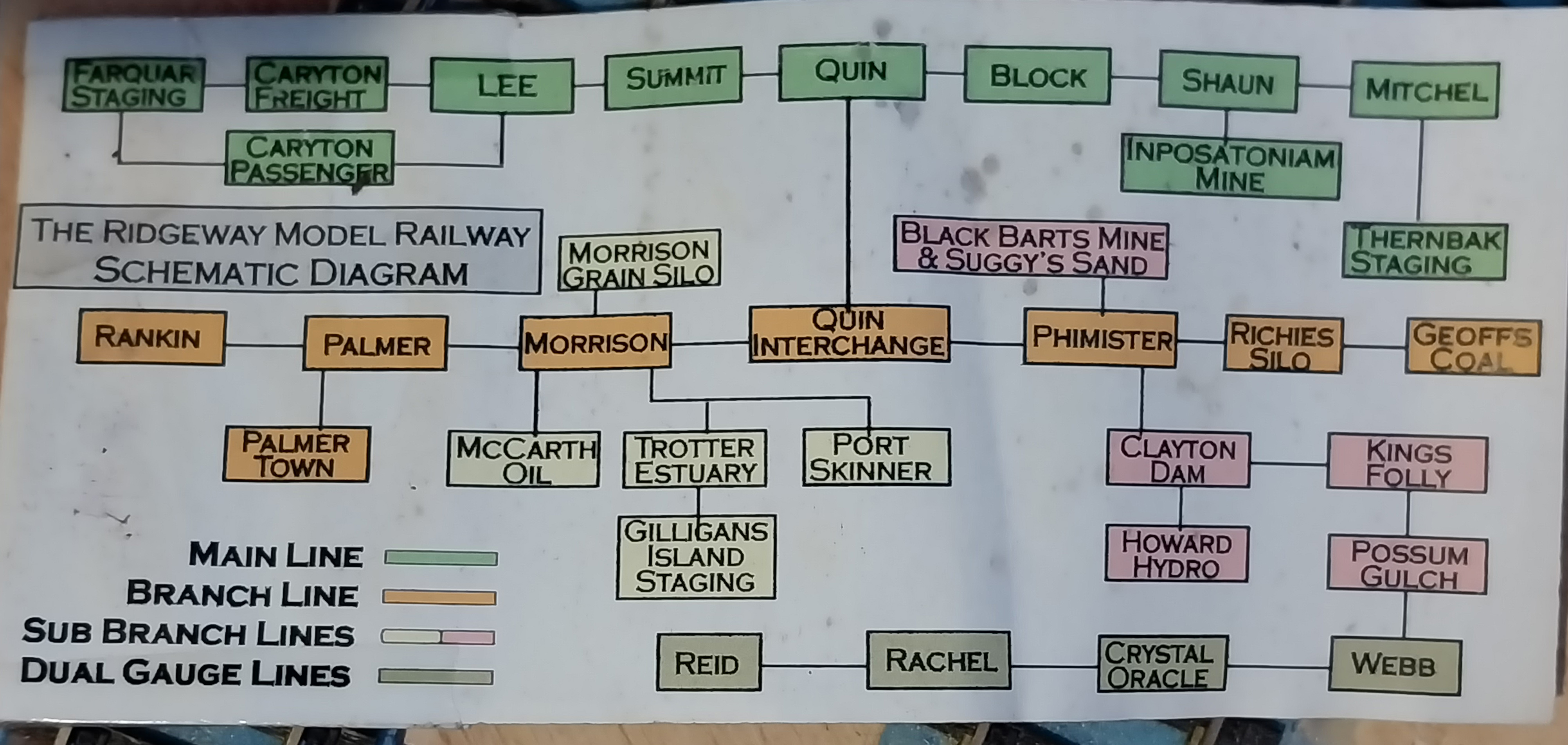
18) A layout schematic posted in the layout room, will help new operators to familiarise themselves with the layout track design

Overall, there are multiple ways to enjoy your model trains. 

Conclusion

I wish to thank Bill, and his fine wife Carolyn for accomodation, and great meal on Saturday night.  Plus a special mention for Keith Jones for allowing Bill to give me access into Dorrigo museum.

I had a great journey, and renewed and made friends at every stop.

Another angle of the Macquarie River bridge at Dubbo.  Might get this one framed too as a memory of the trip


Until next time, build a model or two